Home Advantage in Football: Worth Half a Goal and Already Priced In
Home advantage used to add about half a goal per match in football, but it’s shrinking and the market prices most of it. Residual edges come from unusual factors like altitude or intense rivalries, not just backing home teams blindly.
Generated from Tipzy’s settled record data and published without a named author. Figures come from the same graded corpus as the records; how they are produced is set out in the methodology.
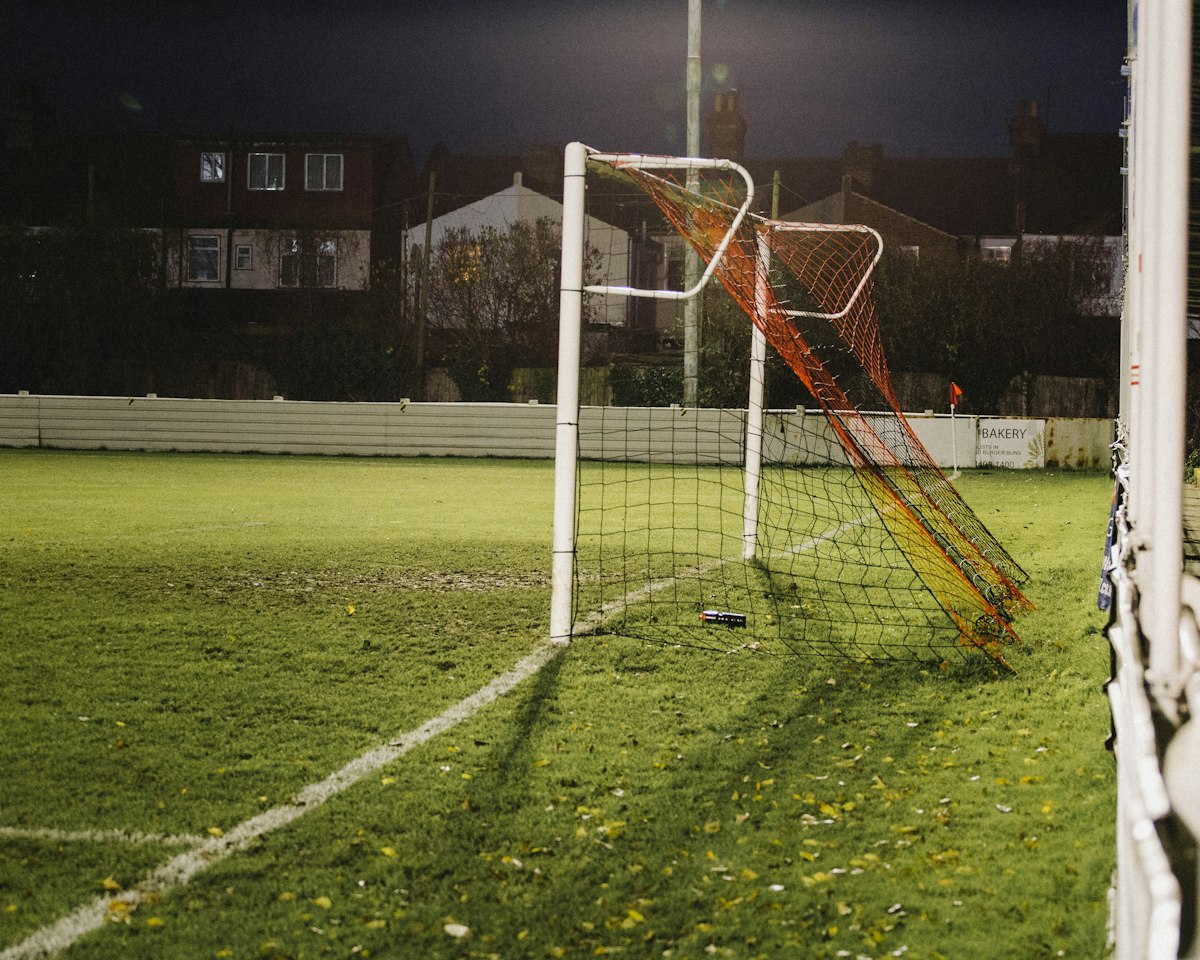
Photo by Kenny Orr on Unsplash
Say you see a Premier League match where the home team is priced at 2.00 and the away team at 3.50. Based on recent stats, you know home advantage usually adds about 0.5 goals. Does just backing the home side offer an edge? Spoiler: It rarely does, because the odds already bake that half-goal in.
Home advantage historically adds about half a goal but it’s shrinking
Going back decades, studies of professional football leagues found home teams average about a 0.5 goal advantage. That’s roughly a 10-15% boost to their chance of winning. In numbers, if two teams are evenly matched on neutral ground with a 40% chance to win each, the home team’s chance might rise to 50-55% with the advantage.
But this isn’t set in stone. The advantage has declined over time. Empty stadium experiments during pandemic restrictions showed home edge plummet. A crowd shouting or exerting social pressure on referees historically added to home edge, and without fans, home teams often just performed at neutral levels.
Table of estimated home goal advantage by period:
| Period | Estimated Home Goal Advantage |
|---|---|
| Pre-2000 | ~0.55 |
| 2000-2019 | ~0.45 |
| COVID Empty Stadia | ~0.15 |
| Post-COVID | ~0.3 |
That roughly means where a 0.5 goal edge used to boost expected home win probability from 45% to 55%, it now might only increase it to about 48–50% under empty or semi-empty circumstances.
The market bakes home advantage into odds, so blindly backing home sides won’t make you money
Bookmakers are aware of home advantage and adjust lines accordingly. Your 2.00 home odds already reflect a 50% win probability which includes the advantage.
If you just back every home team at even odds, you’d expect to win about half the time—barely breaking even before the bookmaker margin. So, blindly backing home teams doesn’t create value; it just matches the baseline expectation.
If market prices didn’t do this, sharp bettors would pile on, pushing odds down and removing that free edge fast.
Residual home edge hides in unusual situations
That said, sometimes home advantage is bigger or smaller than average. These situations can sometimes give you a marginal edge if you spot them:
- Unusual travel burden: When the away team travels thousands of miles crossing time zones, their performance can dip more than normal.
- Altitude effects: Teams based at high altitude have a bigger edge due to opponents struggling with thinner air—think La Paz in Bolivia.
- Derby intensity and crowd volatility: Some local derbies have extreme atmospheres that can rattle visiting teams disproportionately.
- Fixture congestion: A home team playing a key match after multiple games in a short span might be better rested than a traveling opponent.
These factors aren’t always fully priced, so a sharp bettor who quantifies their impact can find small value.
Adjusting estimated probability for venue: A numeric example
Let’s say you analyze a match between Team A (home) and Team B (away). Your model estimates equal strength, so neutral ground probabilities are:
- Team A win: 33%
- Draw: 34%
- Team B win: 33%
Applying a standard 0.5 goal home advantage roughly increases Team A’s win probability to about 43%, with draws and away win probabilities adjusting accordingly.
The bookmaker’s odds for the home win are 2.10, implying a probability of 1/2.10 = 47.6%. You think the true chance is around 43%, so no edge here. But say this is at 2,600 meters altitude, and you estimate altitude adds an extra 8% benefit to the home side’s chance of winning.
Adjusting:
- Base home win chance with normal home advantage = 43%
- Add altitude bump = 43% + 8% = 51%
Now true probability (51%) > implied by odds (47.6%), indicating potential value.
Staking example, assuming you wager $100:
| Step | Calculation | Result |
|---|---|---|
| Implied probability (odds) | 1 / 2.10 | 47.6% |
| Estimated true chance | 43% + altitude 8% | 51% |
| Expected Value (EV) | (Odds * true chance) - 1 | (2.1*0.51)-1 = 0.071 (7.1%) |
| Expected return on $100 | 100 * 0.071 | $7.10 profit |
This means you expect to gain $7.10 on average per $100 wagered after adjusting home advantage for altitude.
Home advantage changes won’t help much if you don’t know the real probabilities
Adjusting for home advantage is only useful if your base model of team strength and win probabilities is solid. If your model is off by 5-10%, the subtle tweaks for venue won’t improve your bottom-line wins much.
Work on getting good estimates from form, stats, injuries, and other factors before fiddling with home advantage. Even the best players and teams can’t reliably cash bets that don’t have base value.
What should you do next?
Stop blindly backing home teams just because they’re playing in front of their fans. The market has you covered there.
Instead, build or use a model to estimate true win probabilities without home advantage baked in. Then add or subtract home advantage tailored to the venue and circumstances. Look closely for travel difficulties, altitude, or high-pressure matches where home edge is bigger than usual.
Focus your staking on bets where your adjusted probability clearly exceeds the odds-implied probability. That’s how the small residual home advantage edges turn into long-term profit — if your model is better than the market’s, and you manage bankroll smartly.
If you’re just starting, track your results on neutral, home, and varied-venue bets separately to see if your adjustments make a difference. Home advantage is real but largely priced; your value lies in finding when it’s more or less than the usual 0.5 goal.
Follow that, and you’ll be treating home advantage like a strategic factor instead of a gambler’s crutch.